- Mary Lynne Bradley b. June 2, 1938 in Lansing Michigan to Burlyn T. Bradley and
- Gertrude Mary Crain, b. March 8, 1910 in Escanaba, Michigan to Timothy Crain and
- Nina Gertrude Bartley, b. Oct. 2, 1897 in Escanaba, Michigan to George B Bartley and
- Nina H. Leighton, b. July 7, 1867 in Jonesport, Maine to Arthur Leighton and
- Lois Donovan, b. September 1845 in Jonesport, Maine to Jeremiah Donovan and
- Esther Rogers, b. 1805 in Jonesport, Maine to Prince Rogers and
- Lydia Carr, b. April 1, 1763 in Georgetown, Maine to Macrest Carr and
- Elizabeth Waite, b. before Dec 1728 in Ipswich, Mass, to Benjamin Waite and
- Elizabeth Holland, b. abt 1705 in Ipswich, Mass to John Holland and
- Elizabeth Park, b. July 28, 1679 in Cambridge, Mass to Thomas Park and
- Abigail Dix, b. May 26, 1637 in Watertown, Mass to Edward Dix and
- Jane, born in England.
May 12, 2013
Happy Mother's Day!
In honor of Mother's Day 2013, 12 generations of the Mothers of my Mother.

Oct 12, 2012
Hey! The President of the United States is my Cousin!
How do you like that! Both President Obama and candidate Mitt Romney are direct descendants of Edward the First, King of England.

And so am I! I love finding new cousins!
Jul 31, 2012
Othello Talbot
I don't know much about my Great Grandmother, other than the vital statistics. Her name was Myrtle Talbot, and she died in 1939, so none of her living grandchildren were old enough to know much about her, either.
Her family has been a little challenging to find givin the various spellings of the names, Talbot. It has been recorded as "Talbert," "Tolbott," "Falbert," and even "Lalvat." Othello may have been called "Phil." His sister, Adelia, called Lelia, May, or Mae, and his brother, Leon or Leland.
I do know that the research I have on her family makes me feel sad.
Her Father, Othello Talbot, was born at Assyria, Barry Co., MI on August 2, 1848 to John B Talbot (maybe called "Buren.") and Arvilla Andrews. He had a sister (Adelia Mae) who was a year older, and a brother (Leon) who was 3 years younger. In 1863, John enlisted as a Private in Co. H, 6th Michigan Cavalry. He died on February 29, 1864 from pleuro-pneumonia at the Third Division Hospital, Alexandra, Virginia.
Othello was just 5 years old.
3 months later, she married a widower with 4 or 5 young children named Erastus Warren. I feel like it was probably a marriage of necessity, she needed support and he needed help with his children. Although she was later to recieve John's pension.

For some reason, they are living separately in Bellevue, Eaton Mi. in 1870. Erastus Warren's household includes 2 young girls (aged 3 and 5) who are possibly Arvilla's children as well.
When Othello was 14 years old, his mother died (April 18, 1873.) What do 3 young children with no parents do in 1873? Were they welcome in their step-fathers home? Did they go to live with one of their many aunts and uncles in Barry Co.?
By 1880, Othello was married to my 2nd Great-Grandmother, Ella Odell. Ella was 17 years old and they lived with Ella's widowed mother on her farm. Myrtle was born on March 31, 1881 and she was their only child.
I'm assuming that they were still farming in 1889. Probably still with Ella's mother, Sarah Pierce Strong Odell (hm, why do I think that? I don't know. Other than Sarah still had the farm, and probably needed the help.)
I'm not sure if Othello was a firefighter, part of a "gang of men" who went to help, or an employee of Higgins'Mill, but He was at the big fire on October 15, 1889...
Charlotte Tribune, October 23, 1889.
Listed under local news.
On Wednesday morning of last week our neighboring village of Bellevue suffered an irreparable loss in the death of one of her estimable citizens and in the burning of Higgins' saw and planing mill, cider and jelly works and fruit evaporator. The fire was discovered about 8 o'clock a.m. and the fire company was soon at work but the flames proved uncontrollable, and soon this institution, which was furnishing work to about 30 men, was reduced to ashes.
One of the firemen, Mr. Othello Talbert, while helping to remove the cider press, was caught by falling timbers and received injuries to his skull that proved fatal a few hours after the accident. Mr.Talbert was an industrious young man of good habits. He leaves a wife and child. Several others were slightly injured.
Probably no institution in Bellevue was doing more to give employment to the people than Higgin's mill. The loss will be felt by all. Mr. Higgins' loss was upwards of $4,000 and his insurance but $500. Being a public spirited, pushing, energetic man, it is more than likely that he will rebuild. Mr. Jas. Holden, who had an interest in the evaporator business, lost about $400.
Kalamazoo Gazette, Thursday, October 17, 1889
BELLEVUE, Oct. 16 - This afternoon Higgins' planing and saw mill, cider and jelly works and evaporator burned. The fire probably caught from the burning sulphur in the bleacher. About 30 hands are thrown out of employment. The loss is about $5000; insurance $500.
During the progress of the fire a gang of men attempted to move the cider press, which fell on Phil Talbot, a young married man, crushing his skull. He is yet alive but cannot survive. Another man was overcome by the heat but recovered consciousness a little later.

Bay City Times, Wednesday, October 16, 1889
Fatal Fire
Bellevue the Loser of an Industry Today.
BELLEVUE, Mich., Oct. 16 -- This forenoon Higgins' planing and saw mill, cider and jelly works and evaporator were burned. The fire probably caught from the burning sulphur in the bleacher. About 30 hands are thrown out of employment. The loss is $5000, with $500 Insurance. During the progress of the fire a gang of men attempted to move a cider press, which fell on Phil Lalvat, a young married man, crushing his skull. He is yet alive but can't survive. Another man was overcome by the heat but recovered consciousness a little later.

The accident left my Great-Grandmother fatherless at 6 years old.
Jun 4, 2012
Little Miss Preuss Update
Yesterday, I ran across a news story about a niece of my great grandmother. This morning, I have a little more information.
It looks like Rosa didn't escape her life in Lansing until she married Louis Flechner (b.1891 in Russia) on August 17, 1916 in Lansing.
Their first child, a daughter named Lillian, was born in Milwaukee Wisconsin in 1918. By 1930, the couple still lived in Milwaukee with 9 children.
Rosa made the news again on April 4, 1930 when her husband pointed a shotgun at her and threatened to kill her. She fled to a friend's home and reported the incident to police. Louis disappeared, but returned home several days later where he was arrested. No word (yet) on what happens next.
Rosa's family tended to make the news in the most unfortunate ways. In 1900, a child was injured by a horse:

No word on which child this was. Rosa was 2 years old, so it actually could have been her. She had a 3 year old sister (Gertie, who died from appendicitis in 1906) and a baby brother (Charlie, who died several months earlier than this incident, from Cholera.)
Rosa's father, Frank, was a meat dealer in Lansing. In 1913, there was a crack down on violators of Michigan's new pure food laws and Frank was among those arrested. As an example, he was the only one sentenced to jail time:

It looks like Rosa didn't escape her life in Lansing until she married Louis Flechner (b.1891 in Russia) on August 17, 1916 in Lansing.
Their first child, a daughter named Lillian, was born in Milwaukee Wisconsin in 1918. By 1930, the couple still lived in Milwaukee with 9 children.
Rosa made the news again on April 4, 1930 when her husband pointed a shotgun at her and threatened to kill her. She fled to a friend's home and reported the incident to police. Louis disappeared, but returned home several days later where he was arrested. No word (yet) on what happens next.
Rosa's family tended to make the news in the most unfortunate ways. In 1900, a child was injured by a horse:

No word on which child this was. Rosa was 2 years old, so it actually could have been her. She had a 3 year old sister (Gertie, who died from appendicitis in 1906) and a baby brother (Charlie, who died several months earlier than this incident, from Cholera.)
Rosa's father, Frank, was a meat dealer in Lansing. In 1913, there was a crack down on violators of Michigan's new pure food laws and Frank was among those arrested. As an example, he was the only one sentenced to jail time:

Rosa's son, Emil, made the national news in 1957 when he filed for a divorce due to "mismanagement of his affairs." Apparently, his wife claimed to have been saving money by buying a chair for 37 cents, then spending 200 dollars to repair the chair. That must have been some "news of the weird" type story.
I don't know if Rosa ever managed to get out of going to school, but she at least saw a small part of the world outside of Lansing and certainly lead an eventful life!
Jun 3, 2012
Whatever Happened to Little Miss Preuss?
While reading old newspaper articles, I ran across a story about the niece of my Great Grandmother, Minnie Preuss Schaar. Rosa L Preuss was the daughter of Frank and Hannah Preuss. Frank Preuss immigrated from Germany in 1894, 3 years before his parents and siblings, and settled in Lansing Michigan.
LITTLE MISS PREUSS WANDERS OUT NIGHTS
LANSING 13-YEAR-OLD GIRL STAYS AROUND SUMMER RESORTS ALONEThe incidents did cause concern to the patrolmen, because she ended up in court:
Lansing, Mish., May 31 -- Lansing has a 13-year-old girl, Rosa Preuss, who seems to have a mania for staying around summer resorts late at night alone. Twice in two days has Rosa been taken from summer resorts and to her home in North Lansing by the police and the officers are beginning to wonder what is to be done.
At midnight Sunday a telephone call from the watchman at Waverly Park, three and one-half miles west of the city, notified the police that a small, bareheaded (?) girl was wandering about the park alone. The patrol automobile was sent and carried Rosa to the home of her father, Frank Pruess, a meat dealer. On the way the girl told the officers that she wanted to stay in the park, so she would have an early start for the Memorial day celebration. She said she was not afraid of the dark. The parents said she had left home early in the evening.
Monday midnight the watchman at Pine lake resort, nine miles east of lansing, sent in a call. The patrol made this trip and again Rosa was wandering around the deserted park. The parents do not seem to be greatly concerned over the girl's escapades.
(Kalamazoo Gazette, June 1, 1910, p.2)
GIRL RUNS AWAY FROM HOME
Say's She's Tired of School and Wants to See World.
Lansing, Mich., May 31 --
Rosie Preuss, the 13-year-old daughter of Mr. and Mrs. Frank Preuss, will be taken before the judge of probate this week on a charge of incorrigibility. Three times in less than a week the girl has run away from home, but each time has been caught in a nearby town and returned. She gives no excuse for her actions except that she is tired of going to school and wants to see the world. Monday she was found at a farm home near Pine Lake, ten miles from home, having walked the entire distance, she said.
(Saginaw News, 5-31-1910, p. 3)
I found Rosa in the 1900 and 1910 Census', but she would have been 23 years old in 1920 and is not listed with her parents. A quick search didn't turn up a marriage or death record, either. So I wonder... did she finally get away to see the world?
Apr 13, 2012

Mar 21, 2012
OLIVET FARMER FOUND DEAD IN HIS BUGGY
CHARLOTTE, Oct. 21 - The dead body of Simeon J. Cole of near Ainger or Olivet station was found Thursday afternoon in his buggy in the yard at the home of Myron Lampton, where the horse had stopped when it found it had no driver. Deputy Sheriff Carlton Gibson and Dr. McLennon of Bellevue decided it was a case of apoplexy. Mr. Cole was 70 years old and had been in poor health for sometime.
Kalamazoo Gazette, October 21, 1921 (pg 3)

"The Free Dictionary,"
n.
1. Sudden impairment of neurological function, especially that resulting from a cerebral hemorrhage; a stroke.
2. A sudden effusion of blood into an organ or tissue.
3. A fit of extreme anger; rage: "The proud . . . members suffered collective apoplexy, and this year they are out for blood" (David Finch).
Simeon J. Cole was the second husband of my 2nd great grandmother, Ella Odell Talbot Cole. Ella's first husband (my 2nd great grandfather) died in a fire in 1889, when their daughter (my Great Grandmother, Myrtle Talbot Bradley) was just 8 years old. Ella then married Simeon J. Cole and they lived at "the Cole farm" where Myrtle was raised. Ella died in 1919 and is buried with her first husband at Bellevue (Riverside) Cemetery. Simeon is also buried there, alongside his first wife, Jenny Cooper Cole. He is also listed on the Cole Family marker at Spauding Cemetery, but he isn't buried there.
Mar 17, 2012
Kiss Me! I'm Irish!

Patrick Crain
son of John and Atty (McDonough) Cryan
b. January 26, 1831, d. May 6, 1891
My 2nd Great Grandfather, Patrick Crain, was the fourth of ten children born to John and Atty (McDonough) Cryan at Riverstown, Co. Sligo, Ireland. He and his siblings were baptized at Taunagh Parish Church which was founded by St. Patrick himself!

LDS Microfilm
In a 1962 letter to my Grandmother, Edna Grasse (a niece of Patrick Crain,) writes:
March 11, 1962
Dear Cousin Gertrude, What a pleasant surprise to get a letter from an unknown relative. I got down the family bible and have compiled some statistics about the Crains. I suppose you know about your father's brothers and sisters, eleven of them - and whom they married. I know them all and where they lived.
My Grandfather, John Crain lived in Drumrain, Sligo Co., Ireland and worked in a bank. When he died his widow emigrated to the U.S. in May 1848 and settled in Boston, Mass. She emigrated to Wisconsin in May 1855. Two sons remained in Mass. James and Michael. My grandmother Atty, died in Eldorado, Wis. Jan. 20, 1880.
My dad, Mark was the youngest. He was 3 when he came to the U.S. They came in a sailing vessel and it took eight weeks!!!
Edna also says that the name was spelled "Cryan" in Ireland.
Patrick's uncle, Mark Cryan had migrated to the United States and an earlier time. He sent for Patrick's 2 older sister. When John died, Atty brought her remaining 8 children. They sailed to Boston and she ran a boarding house in Leominster, MA for a time.
Patrick, at least 2 of his siblings, and their uncle Mark went west to Eldorado, Fond du Lac, Wisconsin about 1855 and took up farming. Atty soon followed with 3 of the remaining 5 children, with James and Michael (who spelled their last name "Crane" staying back in Massachusetts.
Patrick applied for citizenship in 1856.

Located and copied by Greg Hamm
He married Bridget Murray, daughter of John and Catherine (Geraghty) Murray from Co. Longford, Ireland, in 1858 and they had 12 children.
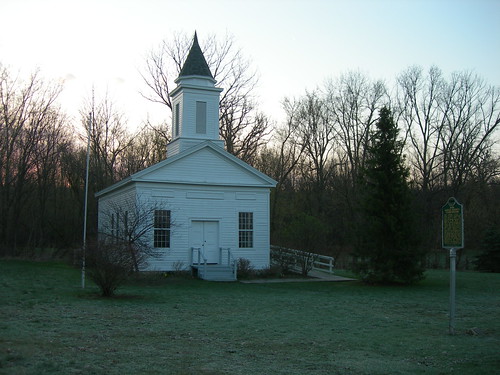
Patrick's name appears on the deed to the land for St. Mary's Mission, Eldorado's Catholic Church. The deed was signed on March 1st 1867 and the land was purchased for about $100.00. According to a Crain cousin who served on the cemetery board, people buried at the adjoining cemetery are all related to the Crain family.

Picture taken by Audrey Riley (2000)
St. Mary's Mission, Eldorado, WI
Known as "The Little Crain Church" by Crain Descendents


An Irish Wish for a Friend
Wishing you a rainbowFor sunlight after showers—Miles and miles of Irish smilesFor golden happy hours—Shamrocks at your doorwayFor luck and laughter too,And a host of friends that never endsEach day your whole life through!
Mar 15, 2012
Emma Varnera Bradley Andrews (1845 - 1908) - Find A Grave Memorial
I'm just trying out "Find a Grave's" new Blogger Share button! Seems to work nicely! So Thanks to Jim for locating and photographing Emma's memorial.
Emma Varnera Bradley Andrews (1845 - 1908) - Find A Grave Memorial
Emma Varnera Bradley Andrews (1845 - 1908) - Find A Grave Memorial
Mar 4, 2012
Emma V Bradley
Emma Varnera Bradley, born at Kalamo, Eaton County, Michigan on October 13, 1845, was the youngest daughter of James D. and Tirzah (Lankton) Bradley.
Emma's young life seems more eventful that most, given the sensational murder trial of her sister when Emma was just 11 years old. Her father died when she was 12. In 1860, she lived at the farm with her brother, Truman, his wife Abigail, her mother and her aunt Hannah Lankton.

The Pan American was a world's fair held in Buffalo NY in 1901.
Emma's young life seems more eventful that most, given the sensational murder trial of her sister when Emma was just 11 years old. Her father died when she was 12. In 1860, she lived at the farm with her brother, Truman, his wife Abigail, her mother and her aunt Hannah Lankton.

1860 U.S. Federal Census, Kalamo, Eaton, Michigan
In 1862, Emma's sister-in-law, just a few months older than Emma, died during childbirth.
Emma married Robert Andrews of Oswego, New York on April 5, 1864 at her home in Kalamo. Emma and Robert moved to Robert's childhood home on a farm in Southwest Oswego, New York where their first daughter, Lucy Estella, was born on April 26, 1866. They had a second daughter, Clara Augustus, on November 15, 1868 and a son, William Bradley Andrews on November 16, 1870.
The family was well known in the community and were active members of the Hope Grange and the Southwest Oswego Baptist Church.
Thanks to "Old Fulton Postcards," I've been able to piece together a "snap shot" of Emma's life in Oswego.
On January 1st, 1890, the family had a New Year's Eve party!
OSWEGO DAILY TIMES JANUARY 1 1890
SOUTHWEST OSWEGO
Jan 1.-Last evening a large number of young people met at the residence of Mr. Robert Andrews. The time was spent in playing games and singing. Lunch was served at 11 o'clock, followed by popcorn and peanuts. At two o'clock the party broke up realizing that they had not been home since last year.
In September 1894, Her brother Ira D. Bradley came to New York for a visit:
OSWEGO DAILY TIMES, WEDNESDAY SEPTEMBER 5, 1894Emma and Lucy took a trip to Michigan in 1895. Apparently, Clara and William didn't go along.
Southwest Oswego
Sept. 3
Mrs. Robert Andrews is entertaining her eldest brother from Michigan.-
OSWEGO DAILY TIMES FRIDAY AUGUST 16, 1895They hosted a social in 1898:
Robert Andrews wife and daughter Lucy started for Michigan today.
OSWEGO DAILY TIMES OCTOBER 10, 1898In 1899, Clara married S. Franklin Lewis at the home of her parents. Sounds like a beautiful gown she wore. The Wedding March was played by Clara's cousin, Miss Elizabeth Andrews. I thought Clara's father was an only child, but if Elizabeth is Clara's first cousin, he must have had a brother. Emma's brother Truman died in Feb. 1899. I wonder if she went to Michigan at that time, but I didn't find a notice.
SOUTHWEST OSWEGO
OCT 10- On Friday evening of this week the Y.P.S.C.E. will hold a pumpkin pie social at the home of Mr. Robert Andrews.
OSWEGO DAILY TIMES JUNE 27, 1899Later that year, they held another social for the church youth. Lucy was a school teacher, and a Sunday School teacher, so maybe these were her parties.
Lewis-Andrews
A very pretty home wedding occurred at Southwest Oswego Wednesday evening, June 14, when Clara Augusta, second daughter of Mr. Robert Andrews, was married to Mr. Franklin Lewis of Fruit Valley. The bride was attended by her friend, Miss Cora Vodra, while William, brother of the bride, acted as best man. At eight o'clock Miss Elizabeth Andrews, cousin of the bride, played Mendelsaohn's wedding march and the bridal party descended to the parlors where the Rev. A.H. Sutphin performed the ceremony.
The bride wore a gown of white cashmere and white satin and wore white bride's roses, the bridesmaid white organdie and pink roses. The parlors were beautifully trimmed with ferns, roses and daisies. After the ceremony and elaborate wedding supper was served.
Guests were present from Oswego, Scriba, Volney and Sterling. Mr. and Mrs. Lewis will reside near Fruit Valley and their many friends wish them a long and happy future.
THE OSWEGO DAILY PALLADIUM: WEDNESDAY EVENING, NOVEMBER 22, 1899Emma and Lucy visited the Pan American in October 1901
OSWEGO TOWN
The young people of the Baptist church will hold a social at the home of Robert Andrews on Friday evening December 1st.
OSWEGO DAILY TIMES, MONDAY EVENING, OCTOBER 21, 1901
SOUTHWEST OSWEGO
OCT.21- Mrs. Robert Andrews and daughter, Lucy, visited the Pan-American last Saturday.
 |
Birdseye view of the Pan-American exposition, Buffalo, May 1 to November 1, 1901
|
The Pan American was a world's fair held in Buffalo NY in 1901.
More visitors from Michigan in November 1901.
Oswego Daily Times, Wednesday Evening, November 13, 1901Several mentions in August 1905, including another visit from Emma's sister, Lury. I wonder about Lucy's relatives in New York City.
SOUTHWEST OSWEGO
Nov. 13 - Mrs. Lura Thornton and Mr. Ira Bradley of Ainger, Mich., are visiting their sister, Mrs. Robert Andrews.
OSWEGO DAILY TIMES, TUESDAY EVENING AUGUST 15, 1905
Southwest Oswego Aug. 14-
Miss Lucy Andrews is visiting relatives in New York City.
Mrs. Jennie Baldwin of Fulton is the guest of Mrs. Clara Lewis.
Mrs. Lucy Thornton of Ainger, Mich. is visiting her sister Mrs. Robert Andrews.
Quite a bit going on around Lucy's marriage to Mr. H.E. Kingsley on Aug 8, 1906.
OSWEGO DAILY TIMES, THURSDAY EVENING, AUGUST 9, 1906
OSWEGO CENTER
Miss Jennie Daly gave a shower this afternoon at her home at Southwest Oswego in honor of Miss Lucy Andrews, who will be married this week Wednesday.
KINGLSEY-ANDREWS
Popular Teacher of Oswego Town Wedded to Syracuse Man
SOUTHWEST OSWEGO, August 9-
A quiet but pretty house wedding occurred at the home of Mr. and Mrs. Robert Andrews of this place Wednesday, August 8, when their daughter, Lucy Estella, was united in marriage ot Mr. Herbert Eugene Kingsly of Syracuse, the Rev. G.A. Fairbank officiating.
The house was prettily decorated with evergreen and flowers, Miss Marcia Pease playing the wedding march. The bride was tastefully gowned in a traveling dress of brown silk and carried white sweet peas. The wedding presents were numerous and elegant and included two hansome pieces of silver from the Southwest Oswego Baptist Church of which the bride was a member, also a peice of hand-painted china fromher Sunday School class. She is a well-known teacher of Oswego Town, popular in social work and much esteemed by all.
After a short sojourn among the Islands Mr. and Mrs. Kingsley will be at home to their friends at 129 Purple Street, Syracuse.
OSWEGO DAILY TIMES, August 14, 1906
SOUTHWEST OSWEGO
Aug 14--Mr. and Mrs. A Campbell and Mrs. Lura Thornton of Ainger, Mich. are visiting their sister, Mrs. Robert Andrews
OSWEGO DAILY TIMES AUGUST 18, 1906In 1908, Emma lost her husband on March 26th, then her brother, Ira, on July 21. Emma was Ill at the beginning of December, and died at home on Wednesday, December 16, 1908.
SOUTHWEST OSWEGO
August 18.-- Mr and Mrs G.A. Campbell and Mrs. Lury A Thornton of Charlotte Michigan, who have been visiting at the home of Robert Andrews and who called there to attend the wedding of his daughter, returned to their home yesterday.
OSWEGO DAILY TIMES DECEMBER 21 1908
SOUTHWEST OSWEGO
Mrs. Emma Andrews, widow of the late Robert Andrews, died at the family home in this town Wednesday Dec. 16, after an illness of 15 days. She leaves one son, William, of this town, and two daughters, Mrs. H.E. Kingsley, of Syracuse, and Mrs. S.F. Lewis of Fruit Valley, also two sisters, Mrs. Lura Thornton and Mrs. Sarah Campbell, of Bellevue, Mich.
Mrs. Andrews was a member of the Baptist Church and also of Hope Grange. The funeral was held Friday, Internment at Rural Cemetery.- Mrs. Sarah Campbell, of Bellevue, Mich. and Mrs. Jennie Baldwin, of Fulton, N.Y., are in town, called here by the death of Mrs. Andrews.
Mar 1, 2012
Death of Robert Andrews

Obituary
Mr. Robert Andrews
Died at his home one mile West of Southwest Oswego one of Oswego Town's well know and highly respected citizens, Robert Andrews, aged 68 years 11 months and 21 days. Mr. Andrews had lived during his whole life in the same school district having been born on a farm adjacent to the present homestead to which he moved with his parents when about four years of age. On April fifth 1864 he was united in marriage to Miss Emma V. Bradley of Kalamo, Eaton Co., Michigan; and she with their three children, Mrs. H.E. Kingsley, Mrs. S.F. Lewis, and William B. Andrews still survive him. He was a kind and sympathatic husband and fater and a great lover of home and family.
Although he had been in poor health for years, and death was not unexpected, the end was sudden and a great shock to his friends, yet he pass- ed away so peacefully that they scarcely knew when the spirit took its flight.
He was much interested in the political affairs of the country and town as a Republican, but did not de- sire official positions, yet he had vot- ed at every election after he became of age.
He had been a faithful attendant of the S.W. Oswego Baptist Church since its organization, and later be- came one of its esteemed members, since which time he has been deeply interested in its welfare, and has con- scientiously supported its workings in all ways acting as trustee for a num- ber of years.
The large number who attended his funeral at the home church on March 29, notwithstanding the bad condition of the roads, told of the high respect and esteem in which he was held.
"Mark the perfect man and behold the upright; for the end of that man is peace."
CARD OF THANKS
South West Oswego, April 1 -
We wish to express our sincere thanks to our neighbors and friends for their kindness and sympathy during the short sickness and burial of our dear husband and father. Also to the Baptist Curch and Hope Grange and others for the beautiful flowers given at this time of our great bereavement.
Mrs. Emma V. Andrews,
William B. Andrews,
Mr and Mrs H.E. Kingsley,
Mr and Mrs S.F. Lewis
Feb 27, 2012
Double Wedding at Charlotte
DOUBLE WEDDING AT CHARLOTTEPopular Young People Living South ofCity are Wedded -- Best ManBecomes Groom
Charlotte, Mich., May 1.-- Rev. S.C.Hall had the honor of officiating at a double wedding Sunday, the ceremony taking place at his residence in this city. George M. Bradley and Miss Bessie M. Mellor, two popular young people from south of the city were first united in marriage. Wayne C. Bradley, a cousin of the groom, and Miss Leurena Weeks, a chum of the bride, standing up with them.
Immediately after this ceremony the latter two were united in marriage, the newly married Mr. and Mrs. George Bradley acting as best man and bridesmaid. The two couples will reside in Walton township.
(Kalamazoo Gazette-05-02-1911, p.2)
Another fun story about some fellow descendants of James D. Bradley. To me, these newspaper articles give life to the names, dates and charts. Both George and Wayne are Grandsons of Ira D. Bradley, son of James D. Bradley.
Feb 26, 2012
Old Newspapers
I accidently bought a subscription to GenealogyBank.com  last week. A blogger I follow mentioned that she got a 1 month trial, so I clicked and signed up... not realizing that the trial was 10 bucks! My fault, I just whipped through the registration assuming it was free.
Had I known, I would have bookmarked to investigate later, when I could maybe justify the spending. But I'm really glad I didn't know! 15 minutes would have been worth more than 10 dollars to me! I love reading old newspapers. They reported everything from visitors and family picnics to legal problems and obituaries. Fultonhistory.com makes a lot of New York papers searchable and available for free.
Here's an interesting story I found about my 6th cousin, 6x removed, the grandson of my 3rd Great Grandfather, James Dickinson Bradley.
Ira D Bradley was about 20 years old when he came to Eaton County Michigan with his parents and siblings in about 1841. Five years later, he married Aseneth Jane Day (the daughter of Asa Day,) and they had 5 sons. His fourth son, Andrew Jackson Bradley, married Hattie Roscoe on March 16, 1880 at Walton, Eaton County, Michigan.
That's all I knew about Andrew, except that he died Oct. 24, 1898 in Battle Creek and was buried at Olivet Cemetery where his parents are buried. Andrew and Hattie never had children.
And then I found this:
What a sad story. I know it's him because his death certificate says he divorced, and died of Typhoid Fever in Battle Creek on Oct 24, 1898.
I don't know when they divorced, but Hattie married Joel L Marble just 3 months before Andrew died.
By 1900, she was divorced again and living with her father, John Roscoe.
She married for a third time, later in 1900, to Henry M Baker and he died in 1902.
The "Modern Woodmen" was (and is) a fraternal organization that protected families following the death of a breadwinner.
Had I known, I would have bookmarked to investigate later, when I could maybe justify the spending. But I'm really glad I didn't know! 15 minutes would have been worth more than 10 dollars to me! I love reading old newspapers. They reported everything from visitors and family picnics to legal problems and obituaries. Fultonhistory.com makes a lot of New York papers searchable and available for free.
Here's an interesting story I found about my 6th cousin, 6x removed, the grandson of my 3rd Great Grandfather, James Dickinson Bradley.
Ira D Bradley was about 20 years old when he came to Eaton County Michigan with his parents and siblings in about 1841. Five years later, he married Aseneth Jane Day (the daughter of Asa Day,) and they had 5 sons. His fourth son, Andrew Jackson Bradley, married Hattie Roscoe on March 16, 1880 at Walton, Eaton County, Michigan.
That's all I knew about Andrew, except that he died Oct. 24, 1898 in Battle Creek and was buried at Olivet Cemetery where his parents are buried. Andrew and Hattie never had children.
And then I found this:
HIS DIVORCED WIFE(Kalamazoo Gazette, Oct 26, 1898, p.1)
Dying Battle Creek Man Left Her $1,000 to
"Increase Happiness"
BATTLE CREEK, Oct. 25 - A queer case of the affection of a man for a divorced wife was revealed here by the death of Andrew Bradley, aged 38, last night at the Nichols hospital. Bradley had been divorced and his wife had married another man. He had no children and lived at a boarding-house. He was taken sick there with typhoid fever and was conveyed by Battle Creek camp of Modern Woodmen to the hospital.
His policy in the Woodmen was made to his divorced wife. He said that he still loved her, and although the wife of another man he desired to increase her happiness and comfort by leaving her $1,000. This is the only case on record of the kind.
What a sad story. I know it's him because his death certificate says he divorced, and died of Typhoid Fever in Battle Creek on Oct 24, 1898.
I don't know when they divorced, but Hattie married Joel L Marble just 3 months before Andrew died.
By 1900, she was divorced again and living with her father, John Roscoe.
She married for a third time, later in 1900, to Henry M Baker and he died in 1902.
The "Modern Woodmen" was (and is) a fraternal organization that protected families following the death of a breadwinner.
Jan 7, 2012

Nov 25, 2011
Family Lore
Letter:
Grand Rapids, Mich
July 9 - 1964
Vern Bradley
Dear Friend
I was up to White Cloud last week saw Bernice Garfield she is having trouble by high blood pressure she said it was hard for her to write.
She said she had a letter from you wanting some information for your son about Sarah Elizabeth Pierce.
I am enclosing a sheet on her families also one on the Purdy Family. I wish your Son has time to check Thomas Purdy and family who came to America in 1836. I think he can get his information in London England.
Hope you and your family are all OK.
From Clarence J Phelps
1727 Silver Ave SE
Grand Rapids 7 Mich
My Grandmother, Gertrude M (Crain) Bradley, was the genealogist in the family and it appears as though she was researching her late Mother-in-law's family in 1964. Kalamo was a small "close knit" community, so her Father-in-law (Vern Bradley) apparently knew where to find some cousins of his late wife, Myrtle Talbot.
Vernor James Bradley married Myrtle Arvilla Talbot on Christmas Day, 1902. Myrtle was born March 31, 1881 to Othello and Ella (Odell) Talbot in Kalamo, Eaton Co., MI.
Ella (Odell) Talbot was the daughter of Sarah Pierce Strong and Jonah L Odell.
The above letter refers to Bernice Garfield, whose father was Ella Odell's half brother, Charles M Strong. The letter writer, Clarence Phelps, was the grandson of Sarah Pierce's oldest daughter, Ruth Annette Strong Purdy.
They related the following:
Sarah Pierce, was born near Maidstone, Kent, England on May 13, 1825. Her maternal grandparents, who disapproved of their son-in-law's Irish heritage, took her when her mother died young. When Sarah was 7 years old, her father "kidnapped" her from the grandparents and brought her to America. They settled in Elmira, New York where Sarah was educated.
She married Reuben G. Strong in 1848 and they moved to Coldwater Michigan, where they remained until 1851.
- Sarah and Reuben's oldest daughter was born Aug. 24, 1844 in Michigan so they must have been married and living there earlier than 1848. Some notes sent by Bernice Strong Garfield are typed on lined notebook paper, so that may have been a typo.
- It looks like Reuben G Strong (born 1819) was a son of Chauncey Strong who came from Sodus, Wayne, NY to Branch Co., MI with his family in 1835. Still trying to figure out when and how Sarah got there.
"In 1851, Mr. Strong and his family started for Oregon by Overland Route with two yoke of oxen and wagons. When they reached the Mississippi river, they were delayed with other emigrants by high water. Mr Strong left his family in Quest of work and during his absence was attacked by cholera. His family never seeing him again. Mrs. Strong disposed of her property . She left the household goods to be shipped back east and the family returned to Coldwater Mich. but she never received the goods.
On Feb 8, 1852, Sarah L Strong, age 26, was married to Jonah L. O'Dell, age 34 of Ovid Twp. by Rev. Ruben Graham at Coldwater Mich.
In 1855 moved to Kalamo Eaton Twp. Mich. and purchased a farm which Mrs. O'Dell owned at time of death. Mrs. O'dell drove with her five children in a one horse rung, Mr. O'Dell preceding them."
According to an LDS pedigree file, Reuben Strong died July 18, 1851. Reuben, Sarah, 7 year old Ruth A. (called Annette,) 3 year old Charles and little Rosetta, not even a year old, must have packed up and headed west in the late spring/early summer of 1851, starting out on the Chicago Road/Sauk Trail which went right through their town. I found several diaries from families going west from Michigan, and they seemed to cross the Mississippi River at various places from Warsaw IL to Galena IL.
I imagine the Strong family meant to claim 640 acres in Oregon under the "Donation Land Act" and traffic west was low in 1851 due to the outbreak of cholera, which was the leading cause of death on the trail.
What I can't imagine is Sarah heading back alone with 2 yoke of oxen, a couple of wagons and 3 very young children...

Other things I think:
Rev. Reuben Graham was an important person to the Strong family. Reuben Strong is listed as "Reuben C Strong," "Reuben G Strong," and "Reuben J Strong." His children's death records all list him as "Reuben G Strong," with Charles' record listing him as "Graham Strong." If his name was Reuben Graham Strong, I expect the Rev. Reuben Graham may have been an uncle, possibly related to Reuben's mother, Ruth. Also, Ruth Annette Strong was living with the Rev.and his wife Deborah (who had no children) in Branch Co. when she was 16 years old while her family was living in Kalamo, Eaton Co., MI.
A Baptist Minister at the time was a Rev. E. Loomis of the Home Mission Society, who was conducting services in Branch Co. just before Rev. Graham. The Rev. Loomis could have been related to Sarah's second husband, Jonah L O'dell, son of Eli and Abigail (Loomis) O'dell.
Things to do:
Visit the Holbrook Heritage Room at the Coldwater Michigan Library !
According to an LDS pedigree file, Reuben Strong died July 18, 1851. Reuben, Sarah, 7 year old Ruth A. (called Annette,) 3 year old Charles and little Rosetta, not even a year old, must have packed up and headed west in the late spring/early summer of 1851, starting out on the Chicago Road/Sauk Trail which went right through their town. I found several diaries from families going west from Michigan, and they seemed to cross the Mississippi River at various places from Warsaw IL to Galena IL.
I imagine the Strong family meant to claim 640 acres in Oregon under the "Donation Land Act" and traffic west was low in 1851 due to the outbreak of cholera, which was the leading cause of death on the trail.
What I can't imagine is Sarah heading back alone with 2 yoke of oxen, a couple of wagons and 3 very young children...
Other things I think:
Rev. Reuben Graham was an important person to the Strong family. Reuben Strong is listed as "Reuben C Strong," "Reuben G Strong," and "Reuben J Strong." His children's death records all list him as "Reuben G Strong," with Charles' record listing him as "Graham Strong." If his name was Reuben Graham Strong, I expect the Rev. Reuben Graham may have been an uncle, possibly related to Reuben's mother, Ruth. Also, Ruth Annette Strong was living with the Rev.and his wife Deborah (who had no children) in Branch Co. when she was 16 years old while her family was living in Kalamo, Eaton Co., MI.
A Baptist Minister at the time was a Rev. E. Loomis of the Home Mission Society, who was conducting services in Branch Co. just before Rev. Graham. The Rev. Loomis could have been related to Sarah's second husband, Jonah L O'dell, son of Eli and Abigail (Loomis) O'dell.
Things to do:
Visit the Holbrook Heritage Room at the Coldwater Michigan Library !
Nov 11, 2011
Thank You
Veterans Day, 11-11-2011
3 of my 3rd great Grandfathers

Jacob H Hamma
Co. K 4th N. J.

John B Talbot
PVT CO H 6TH MICH CAV

Wounded soldiers crossing the Rappahannock River at Fredericksburg on a flatboat--After the battle of the Wilderness ( Library of Congress Prints and Photographs Division Washington, D.C. 20540 USA)
Curtis M Leighton
Co H,1st Maine Hvy Art Reg
Missing at the battle at Wilderness
May 6, 1864
Sep 7, 2011
He Wooed her in a Prison - A Mary H. Bradley Brooks Stewart Story, Part 2
Read part one here.
Although, by local accounts, Mary Brooks was accidently not sentenced to solitary confinement, she is listed as having been sentenced to solitary confinement in the "Annual report of the inspectors of the State Prison of the State of Michigan ... By Michigan State Prison, 1862,"

So, Judge Pratt was evidently able to correct his ommision. Mary is the only female listed, and likely the first female ever confined at the Jackson prison since they built the women's ward in 1856. The solitary cells were added in 1857. Since Michigan abolished the death penalty in 1847, the harshest sentence was life in solitary confinement. Also, in the 1862 annual report, the inspectors related their opinion of solitary confinement:

In 1861, the law was modified so that the inspectors could, at their discrecion, release a prisoner from solitary confinement.

It appears that Mary was never actually put in solitary confinement, but assigned to work as a cook in the new women's prison. A prison officer related that they would not have executed the sentence, "that she was too good a woman for such a doom."
Mary's first "sweetheart," David Stewart, became a regular visitor to the prison. After several years, he became well known to the other prisoners and staff and became a "local tradition." David started a petition to secure a pardon, but that failed. Feeling hopeless and wishing for David's happiness, Mary implored him to marry another. Before 1860, David married Elizabeth, but continued to visit Mary, apparently with Elizabeth's blessing.
**Note: It seems that some journalists in the 1800's were just as prone to fact altering sensationalism as they are today! Ahh, the good old days! I'm assuming/hoping that the bottom line is true, otherwise, it would not have been a story. I've indicated the nonfactual parts with red text.
David Stewart showed up at the secret inquisition, volunteering information that Mary stole his arsenic. He wasn't the only one, though. Apparently, Van Arman thought Mr. Mann's claim that she stole it from him was more credible. There is no indication that David actually testified. Also, Mary did not "Testify That She Poisoned Her Husband."
Since the death sentence was abolished in Michigan some 9 years prior, the "SENTENCE OF DEATH PRONOUNCE" ... false.
Her sentence was never "Commuted to Life," but it certainly seems true that "Later Stewart Had a Change of Heart!"
 Charlotte, Mich., Sept. 21 - Wedded in the evening of their lives, Mary Brooks and David H. Stewart look back with dim, tranquil eyes to the dark morning time, when she stood in the shadow of the gallows, dragged thither by him, her sweetheart, and accuser. Their hair is white now, and the evening promises fair.
They were sweethearts half a century ago. There is not much to tell about that part of it and if one of them had not been faithless there would be nothing at all to tell.
The faithless one was Mary Bradley --for that was her maiden name. In 1852, when she was 21 years old, her parents persuaded her to jilt David Stewart and marry a crabbed old farmer, whose broad acres made him worthy in their eyes.
Here too, the story might end like many another, if Simon Brooks had not died, and from poison. That was three years after his marriage, and all the countryside knew that Mary Brooks had not put an end to all fondness for her old sweetheart.
It was he who fastened the crime of murder upon her. Quite uninvited, he came forward at the inquest and denounced the woman he loved. Pointing his finger at her he exclaimed:
"She saw a bottle of arsenic in my room and asked me to give it to her. I refused. A little later I missed the bottle. Search the murdered man's house and you will find it!"
They searched, and the empty bottle was found.
(as Van Arman said after the trial in part one, they never proved that Mary even had arsenic, let alone stolen arsenic. I would take that to mean that an empty bottle was not found.)
 The trial of Mary Brooks, accused by the man for whom she had stooped to the crime, was the great sensation of the time in that unsettled country.
Its effect was intensified by the extraordinary action of her advocate, the brilliant Van Arman, who closed his plea by swallowing two tablets of the same drug that Stewart's bottle had contained in order to convince the jury that it could not have caused to old farmer's death.
It was done without a moment's warning. The court was a tumult at once. Judge Pratt announced an adjournment and sent for doctors. Van Arnam folded his arms and waved aside those who proffered help.
He did not die, but the risk he had run was of no avail. Mary Brooks was convicted and sentenced to be hanged. Because of her sex the sentence was commuted to imprisonment for life, and she was sent to the new prison at Jackson, the first woman to be received there.
She was resigned, obedient, industrious. When she spoke it was to assert her innocence. The deputy warden of that day now the Hon. William L. Seaton, had a cell built apart for her accommodation since the plan of the prison included no provision for women.
She was not without friends, and --- marvelous to relate--- the staunchest of these was David Stewart.
Nobody ever quite understood his motive, but he gave every evidence of sorrow for the part he had taken in his sweetheart's condemnation and sought to atone for it by agitation for her release. His own signature stood as the head of a petition for that end which was circulated throughout the state.
(As noted earlier, although Van Arman was famous for "The Arsenic Incident," it didn't happen in this trial. Also, he was not her advocate, but the prosecuting attorney.)
 It was strange and touching--that second courtship in jail. Imprisonment softened Mary Brook's character, and Stewart fell in love with her all over again.
The petition was not successful, and these two sweethearts grew old with the walls of a jail dividing them. In course of time the romance ceased to amaze the inhabitants and became merely and existing local tradition.
That they should ever be united seemed hopeless. Mary Brooks entreated Stewart to marry some other woman. She said that it would make her happy. He did marry, but he did not cease to visit the prisoner in jail.
Mary Brooks was pardoned twenty years ago. She was faded but still handsome. From her relatives, who were well-to-do, she inherited a home and a comfortable little fortune. Her life after that was a very quiet one, devoted to deeds of kindness.
She and the Stewart's were neighbors in the little hamlet of Kalamo, Eaton county--neighbors and friends. Mr. Stewart's wife knew all about the old romance, and thought non the worse of her husband for it, or of Mary Brooks. Whoever believed the woman to have been guilty also believed that she had made atonement.
Stewart's wife died a few years ago. He was an old man then, and Mary Brooks was an old woman. There was a third courtship, this time in an environment of smiling fields and gardens--for each had a beautiful country home.
The fruit of that autumnal courtship was a quiet wedding Monday at Mrs. Brooks home. She is 68, and her bridegroom three years older. The shadow of the gallows is far behind them.
This article ran in "The News," Providence R.I. on September 21, 1899. A similar article, "Pardoned Murderess Weds, " ran in the New York Times on September 20, 1899, with mostly the same misinformation. My guess is that the story was picked up from a Charlotte newspaper, maybe relating the story upon David's death in 1899.
Mary was pardoned on February 12, 1870.


Interesting that the prosecuting attorney, John Van Arman, recommended the pardon. He previously stated that, had he defended her, she would not have been convicted. Even more interesting... "upon proof tending to show that some person other than the prisoner was the real instigator of the crime committed." I REALLY wonder who that was! Especially, since it may have been a death bed confession!

Mary is enumerated in the home of her sister's family, LuryAnn and Archelaus Thornton, in the June 1870 Federal Census. Mary's Father, a farmer, died just a year after Mary's conviction. Her Mother, Tirzah, was still living on the farm, along with Tirzah's sister, Hannah Lankton, Mary's brother Truman, his wife, Sarah and several of their children. Her brothers Ira and Joe were also farmers, so between them all, they owned quite a bit of land, but wouldn't necessarily be "well-to-do." Mary probably did not "inherit a small fortune." It is possible that a separate home was built on her sister's land. They were neighbors of David and Elizabeth Stewart.
Elizabeth and David never had children and Elizabeth died on May 22, 1877, aged 57 years.
David H. Stewart and Mary H. Bradley Brooks married on August 25th, 1877 by Elder Sloan, witnessed by her brothers-in-law, George Campbell and Archelaus Thornton. Mary was 44 years old, and David was 56.
On August 21, 1899, just 4 days shy of the 22nd anniversary of of their marriage, David H. Stewart, born to Jacob and Phoebe Stewart at Sparta, Livingston, New York about March 20, 1820, died from bronchitis at age 79 years, 5 months and 1 day.
He was buried at West Carmel Cemetery alongside his first wife, Elizabeth.
In 1900, Mary was back living with her sister, Lury Bradley Thronton, nephew, Gilbert Thornton and his family. Mary died 4 years and 9 months after her husband, on May 13th, 1905, at age 73. She is buried alongside David and Elizabeth at West Carmel Cemetery.
*** Interesting notes: The official reporter on David's death record is Arthur J Day, the son of Lury Woolcutt Day, whom I suspect is Mary's cousin (still trying to prove that though.)
*** There were some land transfers between James D. Bradley and Simeon P Brooks. Also, some land transfers between James D Bradley (Mary's father) and Martin Brackett (Mary's attorney,) possibly for payment?
*** Other than the land transfers, there doesn't seem to be any more information about Simeon Brooks. He is not listed in any Eaton Co., Mi census and I can't find a death or burial record for him or his daughter Edith. The Bradley's were neighbors of a divorced woman, Tina Brooks, but I can't find a connection there. He may have been a relative of Nathan, Aaron or Silas Brooks who were early settlers in Kalamo. Mary's brother, Joseph, was married to Fannie Melissa Brooks, a daughter of Zimri Brooks and Grand-daughter of Silas Brooks.
Just recently, I ran across a note in my Grandmother's stuff, but she didn't seem to pursue the story. I wonder why...

Although, by local accounts, Mary Brooks was accidently not sentenced to solitary confinement, she is listed as having been sentenced to solitary confinement in the "Annual report of the inspectors of the State Prison of the State of Michigan ... By Michigan State Prison, 1862,"
So, Judge Pratt was evidently able to correct his ommision. Mary is the only female listed, and likely the first female ever confined at the Jackson prison since they built the women's ward in 1856. The solitary cells were added in 1857. Since Michigan abolished the death penalty in 1847, the harshest sentence was life in solitary confinement. Also, in the 1862 annual report, the inspectors related their opinion of solitary confinement:
In 1861, the law was modified so that the inspectors could, at their discrecion, release a prisoner from solitary confinement.
It appears that Mary was never actually put in solitary confinement, but assigned to work as a cook in the new women's prison. A prison officer related that they would not have executed the sentence, "that she was too good a woman for such a doom."
| Old Jackson State Prison Photo Credit: Jackson District Library |
Mary's first "sweetheart," David Stewart, became a regular visitor to the prison. After several years, he became well known to the other prisoners and staff and became a "local tradition." David started a petition to secure a pardon, but that failed. Feeling hopeless and wishing for David's happiness, Mary implored him to marry another. Before 1860, David married Elizabeth, but continued to visit Mary, apparently with Elizabeth's blessing.
**Note: It seems that some journalists in the 1800's were just as prone to fact altering sensationalism as they are today! Ahh, the good old days! I'm assuming/hoping that the bottom line is true, otherwise, it would not have been a story. I've indicated the nonfactual parts with red text.
 |
| The News, Providence R.I. September 21, 1899, pg 6 |
David Stewart showed up at the secret inquisition, volunteering information that Mary stole his arsenic. He wasn't the only one, though. Apparently, Van Arman thought Mr. Mann's claim that she stole it from him was more credible. There is no indication that David actually testified. Also, Mary did not "Testify That She Poisoned Her Husband."
Since the death sentence was abolished in Michigan some 9 years prior, the "SENTENCE OF DEATH PRONOUNCE" ... false.
Her sentence was never "Commuted to Life," but it certainly seems true that "Later Stewart Had a Change of Heart!"

They were sweethearts half a century ago. There is not much to tell about that part of it and if one of them had not been faithless there would be nothing at all to tell.
The faithless one was Mary Bradley --for that was her maiden name. In 1852, when she was 21 years old, her parents persuaded her to jilt David Stewart and marry a crabbed old farmer, whose broad acres made him worthy in their eyes.
Here too, the story might end like many another, if Simon Brooks had not died, and from poison. That was three years after his marriage, and all the countryside knew that Mary Brooks had not put an end to all fondness for her old sweetheart.
It was he who fastened the crime of murder upon her. Quite uninvited, he came forward at the inquest and denounced the woman he loved. Pointing his finger at her he exclaimed:
"She saw a bottle of arsenic in my room and asked me to give it to her. I refused. A little later I missed the bottle. Search the murdered man's house and you will find it!"
They searched, and the empty bottle was found.
(as Van Arman said after the trial in part one, they never proved that Mary even had arsenic, let alone stolen arsenic. I would take that to mean that an empty bottle was not found.)

Its effect was intensified by the extraordinary action of her advocate, the brilliant Van Arman, who closed his plea by swallowing two tablets of the same drug that Stewart's bottle had contained in order to convince the jury that it could not have caused to old farmer's death.
It was done without a moment's warning. The court was a tumult at once. Judge Pratt announced an adjournment and sent for doctors. Van Arnam folded his arms and waved aside those who proffered help.
He did not die, but the risk he had run was of no avail. Mary Brooks was convicted and sentenced to be hanged. Because of her sex the sentence was commuted to imprisonment for life, and she was sent to the new prison at Jackson, the first woman to be received there.
She was resigned, obedient, industrious. When she spoke it was to assert her innocence. The deputy warden of that day now the Hon. William L. Seaton, had a cell built apart for her accommodation since the plan of the prison included no provision for women.
She was not without friends, and --- marvelous to relate--- the staunchest of these was David Stewart.
Nobody ever quite understood his motive, but he gave every evidence of sorrow for the part he had taken in his sweetheart's condemnation and sought to atone for it by agitation for her release. His own signature stood as the head of a petition for that end which was circulated throughout the state.
(As noted earlier, although Van Arman was famous for "The Arsenic Incident," it didn't happen in this trial. Also, he was not her advocate, but the prosecuting attorney.)

The petition was not successful, and these two sweethearts grew old with the walls of a jail dividing them. In course of time the romance ceased to amaze the inhabitants and became merely and existing local tradition.
That they should ever be united seemed hopeless. Mary Brooks entreated Stewart to marry some other woman. She said that it would make her happy. He did marry, but he did not cease to visit the prisoner in jail.
Mary Brooks was pardoned twenty years ago. She was faded but still handsome. From her relatives, who were well-to-do, she inherited a home and a comfortable little fortune. Her life after that was a very quiet one, devoted to deeds of kindness.
She and the Stewart's were neighbors in the little hamlet of Kalamo, Eaton county--neighbors and friends. Mr. Stewart's wife knew all about the old romance, and thought non the worse of her husband for it, or of Mary Brooks. Whoever believed the woman to have been guilty also believed that she had made atonement.
Stewart's wife died a few years ago. He was an old man then, and Mary Brooks was an old woman. There was a third courtship, this time in an environment of smiling fields and gardens--for each had a beautiful country home.
The fruit of that autumnal courtship was a quiet wedding Monday at Mrs. Brooks home. She is 68, and her bridegroom three years older. The shadow of the gallows is far behind them.
This article ran in "The News," Providence R.I. on September 21, 1899. A similar article, "Pardoned Murderess Weds, " ran in the New York Times on September 20, 1899, with mostly the same misinformation. My guess is that the story was picked up from a Charlotte newspaper, maybe relating the story upon David's death in 1899.
Mary was pardoned on February 12, 1870.
Interesting that the prosecuting attorney, John Van Arman, recommended the pardon. He previously stated that, had he defended her, she would not have been convicted. Even more interesting... "upon proof tending to show that some person other than the prisoner was the real instigator of the crime committed." I REALLY wonder who that was! Especially, since it may have been a death bed confession!
Mary is enumerated in the home of her sister's family, LuryAnn and Archelaus Thornton, in the June 1870 Federal Census. Mary's Father, a farmer, died just a year after Mary's conviction. Her Mother, Tirzah, was still living on the farm, along with Tirzah's sister, Hannah Lankton, Mary's brother Truman, his wife, Sarah and several of their children. Her brothers Ira and Joe were also farmers, so between them all, they owned quite a bit of land, but wouldn't necessarily be "well-to-do." Mary probably did not "inherit a small fortune." It is possible that a separate home was built on her sister's land. They were neighbors of David and Elizabeth Stewart.
Elizabeth and David never had children and Elizabeth died on May 22, 1877, aged 57 years.
David H. Stewart and Mary H. Bradley Brooks married on August 25th, 1877 by Elder Sloan, witnessed by her brothers-in-law, George Campbell and Archelaus Thornton. Mary was 44 years old, and David was 56.
On August 21, 1899, just 4 days shy of the 22nd anniversary of of their marriage, David H. Stewart, born to Jacob and Phoebe Stewart at Sparta, Livingston, New York about March 20, 1820, died from bronchitis at age 79 years, 5 months and 1 day.
He was buried at West Carmel Cemetery alongside his first wife, Elizabeth.
In 1900, Mary was back living with her sister, Lury Bradley Thronton, nephew, Gilbert Thornton and his family. Mary died 4 years and 9 months after her husband, on May 13th, 1905, at age 73. She is buried alongside David and Elizabeth at West Carmel Cemetery.
*** Interesting notes: The official reporter on David's death record is Arthur J Day, the son of Lury Woolcutt Day, whom I suspect is Mary's cousin (still trying to prove that though.)
*** There were some land transfers between James D. Bradley and Simeon P Brooks. Also, some land transfers between James D Bradley (Mary's father) and Martin Brackett (Mary's attorney,) possibly for payment?
*** Other than the land transfers, there doesn't seem to be any more information about Simeon Brooks. He is not listed in any Eaton Co., Mi census and I can't find a death or burial record for him or his daughter Edith. The Bradley's were neighbors of a divorced woman, Tina Brooks, but I can't find a connection there. He may have been a relative of Nathan, Aaron or Silas Brooks who were early settlers in Kalamo. Mary's brother, Joseph, was married to Fannie Melissa Brooks, a daughter of Zimri Brooks and Grand-daughter of Silas Brooks.
Just recently, I ran across a note in my Grandmother's stuff, but she didn't seem to pursue the story. I wonder why...

Aug 27, 2011
Murder Trial in Charlotte, Michigan - A Story of Mary H. Bradley Brooks Stewart - (Part 1)
I've been intrigued / obsessed with the story of my 2nd Great Aunt, Mary Bradley, since discovering this post back in 2002. Mary's story was a well-kept family secret. Here's what I have learned so far: Mary H. Bradley was born on April 24th, 18321 at Whitestown, Oneida Co., New York, the 6th child (4th living) of James D. and Tirzah (Lankton) Bradley. Sometime around 1841, when Mary was about 8 years old, the family emigrated to Kalamo, Eaton Co., MI. If Mary attended school, she didn't learn to write well, judging from her letters to her best friend, Watson Woodruff. As a young woman of 17 or 18, Mary intended to marry her "sweetheart," David Harrison Stewart, but gave in to her parents wish to marry Simeon Brooks, a much older wealthy land owner2. They were married on April 1st, 18513.

Mary had a daughter named Edith4. Edith and Simeon both got sick and were attended to by Dr. H.T. Fero, who, although not a "regular physician," attended to the sick. The doctor was also a Baptist minister, as well as the postmaster in Bellevue. The little girl died, followed by her father a few months later. According to Mrs. Lena Bradley Phillips the deaths occurred in September and December 1854. Although I can't find an official record , a news story in the "Eaton County Republican" dated February 14, 1857 reports "on or about the 15th of March last," Which ever the year, they died just a few months apart as Mary said that she was distraught over daughter's recent death.5

Sometime later, after Simeon was buried, Ira Pearl, of Kalamo, made an official complaint, suspecting that he was murdered. Mr. Pearl was a farm hand who lived with various Eaton and Barry County families, and may have been living with Mary and Simeon at the time of his death. He seems to have implicated Mary and/or another, possibly Mary's friend, Watson Woodruff.

Mary was probably questioned about poisoning her husband. Pres Swift (L. Preston Swift,) Justice of the Peace6, stopped in from the fields one evening to tell her that they weren't going to do anything until Simeon's body was exhumed and tested. A panicked Mary wrote to her friend, Watson Woodruff7:
"Watson the county is a going to take Sim up so pres swift told me last night he come from feroes and stoped and told me they aint agoing to do any more about it till he is examined and then they are agoing to take us both up "
Mary was so panicked that she thought the medicine must have been poison.
"i am just as sure that was pison in that medicine as can be and if he is dug up and examined states prison is my doom"
Unfortunately, Mary also asked Watson to dig up and conceal the body...
When Mary told her family about the medicine, they also believed that there wasn't much they could do for her.
"watson for the land sake if you have got any mercy on me or want to relieve my trouble do dig him up night off to night i told father jo and tru abaout that medicine and they said it would ruen me and send me to states prison in spite of all they could do if he was dug up and examined"
It's not clear whether or not Simeon's body was actually exhumed. In the short history I found, there was no mention of test results proving guilt.
Judge Abner Pratt appointed John Van Arman as the prosecuting attorney for this case. Van Arman was a popular and well known defense attorney, the most successful of his time. He became famous for the acquittal of a Hillsdale, Michigan woman where he, himself, ingested arsenic in the courtroom and lived, proving that she could not have murdered her husband with arsenic8.
He convened a secret Grand Jury and the testimony led to the indictment of Mary Brooks, accusing her of the murder of her husband by arsenic poisoning, which was allegedly stolen from a neighbor, Mr. Mann.
Although the court was nearing the end of a session, where most cases would be continued to the next session, Judge Abner Pratt ordered the trial immediately. Mary's family hired Mr. Dave Hughs and Mr. Martin S. Bracket to defend her, and they worked hard to get more time to prepare a defense, but Judge Pratt would not permit a delay. He seemed to believe that Mary was guilty and didn't deserve a defense.

The court room was packed on the 5th and 6th of June, 1856. The windows were removed and wagons set up underneath them for those who couldn't get in.
 |
| Eaton County Courthouse 1845-1872 Photo Credit: Jimmy Emerson |
Mary was convicted of murder in two short days, with literally no defense.Judge Pratt asked her to rise, then asked if she had anything to say:
"During the solemn hush caused by the rendering of such a verdict the judge told the defendant to arise, and then asked her if she had anything to say why the judgment of the law should not be pronounced against her. She very naturally supposed this called upon her for a speech. Evidently feeling that she herself must make her only defense, she at once arose and stepped upon the raised platform by the side of the judge's desk to address the audience. As if her proximity to the judicial ermine was contamination, Judge Pratt sternly and harshly ordered her to go down upon the floor, moving his hand as if to push her away.
The scene is yet vivid in my mind. Judge Pratt, with his black bushy hair standing fiercely erect, his black piercing eyes shooting fire from under his shaggy, overhanging eyebrows, appeared the personification of sternness and the power of the law. There was the woman, with her calico sun-bonnet shading her face, shrinking pitifully away, crushed and confused by this unexpected rebuff when called up to speak. She again rallied, but in her confusion she addressed "this congregation," as if it was a church trial. She spoke with much feeling of her recent loss of a young babe, claiming that she had not since been in her right mind in consequence of her great trouble. She did not expressly deny the crime, but conveyed the impression that she did not feel responsible for anything she might have since done. Here was a rich lead for able attorneys, could there have only been time to work it. She spoke but a few moments,—did not ask that court for mercy, and appeared overcome by emotion as she sank into her seat. The judge then again called upon her to stand up, and delivered to her a harsh, angry rebuke for the terrible crime of which she had been found guilty. He appeared to abandon himself to an impetuous determination to be as severe and crushing as possible. He was so vindictive and ferocious that his remarks failed to produce the effect designed. It afforded her a tempest to brace up against. He closed by pronouncing a sentence to hard labor in the State prison at Jackson during life, forgetting, in his virtuous indignation, to include solitary confinement."
After the trial, Judge Pratt spoke of his sentencing address, saying that he forced himself to stop, fearing that he was making a fool of himself. The prosecuting attorney, Mr. VanArman, remarked that there wasn't even enough evidence to convict her of larceny for stealing arsenic, let alone murder.
"The injustice in this case was on the part of the court,in forcing the defendant so suddenly to trial without giving her attorneys an opportunity to prepare for such a defense as should have been made in the case. The testimony which led to her indictment had all been taken secretly by Mr Van Arman before the grand jury, while under present improved practice every word of it would been taken publicly before an examining magistrate, reduced to writing, signed by the witnesses, filed in the clerk's office as a public record, and thoroughly understood and sifted by the attorneys on both sides. The more humane tendency now is to give the defendant a full opportunity to confront and hear his accusers, and to have every facility for making his defense."
Footnotes:
1. Death Certificate (Birthdate different from gravestone - which is April 24th 1832)
2. HISTORY OF INGHAM AND EATON COUNTIES MICHIGAN By SAMUEL W. DURANT, pg 362,"Her husband was much older than herself..."
3. Michigan Marriages, 1822-1995
4. The Family Record of the Descendants of JAMES D. and TIRZAH BRADLEY, 1930, Lena M Bradley Phillips
5. HISTORY OF INGHAM AND EATON COUNTIES MICHIGAN By SAMUEL W. DURANT, pg 375
6. Portrait and biographical album of Barry and Eaton counties, Mich., containing full page portraits and biographical sketches of prominent and representative citizens of the county ... [and] the presidents of the United States and governors of the state, Chicago: Chapman bros, 1891,pg 768
7. Eaton County Genealogy Library, Eaton County Republican Newspaper - February. 14, 1857
8.Historical collections, Volume 11 By Michigan Pioneer and Historical Society: The Arsenic Incedent, pg 284
"The injustice in this case was on the part of the court,in forcing the defendant so suddenly to trial without giving her attorneys an opportunity to prepare for such a defense as should have been made in the case. The testimony which led to her indictment had all been taken secretly by Mr Van Arman before the grand jury, while under present improved practice every word of it would been taken publicly before an examining magistrate, reduced to writing, signed by the witnesses, filed in the clerk's office as a public record, and thoroughly understood and sifted by the attorneys on both sides. The more humane tendency now is to give the defendant a full opportunity to confront and hear his accusers, and to have every facility for making his defense."
__________________________________________________
__________________________________________________
Footnotes:
1. Death Certificate (Birthdate different from gravestone - which is April 24th 1832)
2. HISTORY OF INGHAM AND EATON COUNTIES MICHIGAN By SAMUEL W. DURANT, pg 362,"Her husband was much older than herself..."
3. Michigan Marriages, 1822-1995
4. The Family Record of the Descendants of JAMES D. and TIRZAH BRADLEY, 1930, Lena M Bradley Phillips
5. HISTORY OF INGHAM AND EATON COUNTIES MICHIGAN By SAMUEL W. DURANT, pg 375
6. Portrait and biographical album of Barry and Eaton counties, Mich., containing full page portraits and biographical sketches of prominent and representative citizens of the county ... [and] the presidents of the United States and governors of the state, Chicago: Chapman bros, 1891,pg 768
7. Eaton County Genealogy Library, Eaton County Republican Newspaper - February. 14, 1857
8.Historical collections, Volume 11 By Michigan Pioneer and Historical Society: The Arsenic Incedent, pg 284
Subscribe to:
Posts (Atom)